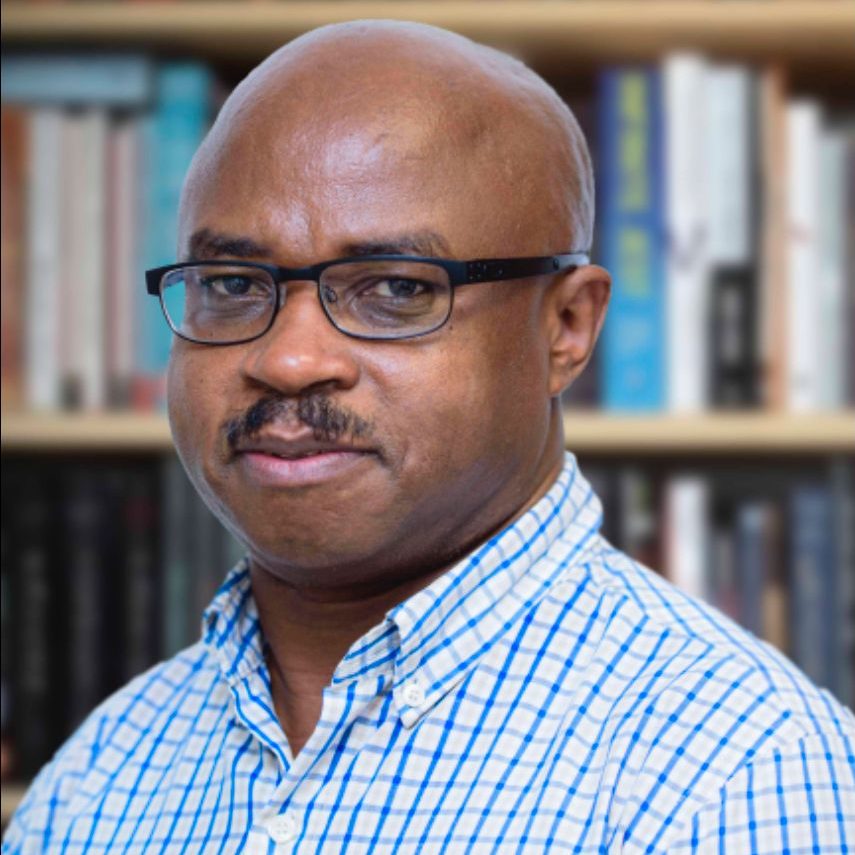
Tumsifu Thomas
Professor Tumsifu Elly Thomas is a distinguished scholar and applied researcher at the University of Dar es Salaam (UDSM), where he serves as an Associate Professor and coordinates the African Centre of Excellence for Sustainable Operations in Resource Management and Food Supply (CSO). His research bridges academic inquiry, policy, and practice across digitalization, agribusiness, entrepreneurship, sustainability, supply chain management, and food security, generating measurable impact on national and regional development priorities while advancing global debates on sustainable operations.
With a portfolio of nearly 20 major research and consultancy projects, Professor Thomas has led or contributed to flagship initiatives including the DAAD–UDSM Sustainable Operations Research Programme, multi-year periodical surveys for WFP Food Security, and Logistics Capacity Assessments, energy studies in refugee camps and host communities, the Productive Social Safety Net (PSSN), livelihood enhancement programmes, and the SIDA-supported Engendering Rural Entrepreneurship Project. His research frameworks have informed both academic discourse and national strategies, reinforcing his standing as a leading voice in sustainable operations and inclusive development.
His contributions have attracted award-winning funding and institutional trust from major partners such as: DAAD, and SIDA. He has consulted for the World Bank, WFP, CARE International, ILO, and SIRLab. He also, has implemented and or coordinated projects supported by the Kuehne Foundation, LEARN Logistics, and SAFA Tanzania. Professor Thomas has published more than 33 peer-reviewed articles, book chapters, and policy reports on topics spanning rural and gendered entrepreneurship, FinTech and financial inclusion, digital and social media strategy, Enterprise Resource Planning (ERP), and customer–vendor power dynamics among others.
Professor Thomas is also deeply committed to academic mentorship, having supervised over 13 PhD candidates. Beyond academia, he serves as Board Chairperson for North Star Alliance–Tanzania and Liberty Sparks, and as an Advisory Board Member for the Paradoxes of Climate-smart Coffee (PACSMAC) project. Through these roles, he champions evidence-based program design, interdisciplinary collaboration, and youth- and gender-inclusive approaches to innovation, climate change, sustainability, and entrepreneurship.
Professor Thomas exemplifies the qualities of a global academic leader advancing digitalization, sustainable supply chain management, food security, and the circular economy while promoting entrepreneurship, inclusive energy access, and resilient agribusiness systems across Africa. .https://scholar.google.com/citations?hl=en&user=v0_CNscAAAAJ
Current professional activity
- Associate Professor – University of Dar es Salaam
https://www.udsm.ac.tz/user/498
CONTACT
PROFESSIONAL
BOX 76575 Dar es Salaam
DAR ES SALAAM, TANZANIA
Tanzania
Phone: +255754272571
PRIVATE
Publications
Understanding customer-vendor power relations as a driver to a successful implementation of enterprise resource planning in Tanzania manufacturing industry
Enterprise resource planning (ERP) systems contribute much to supporting manufacturing operations. Upon implementation, the manufacturing firms rely on the interactions with ERP system vendors to support and maintain this complex system. This study assesses the influence of customer-vendor power relations...
Rural entrepreneurship and the context: navigating contextual barriers through women’s groups
Purpose – This study aims to examine how women’s groups help women to navigate context-related barriers to their engagement in rural entrepreneurship. The paper combines the contextualisation of entrepreneurship framework and the feminist separatist theory to describe how women’s groups...
The impact of growth mindset training on entrepreneurial action among necessity entrepreneurs: Evidence from a randomized control trial
Although entrepreneurship training programs are designed to help necessity entrepreneurs acquire skills and capabilities to take entrepreneurial action, participants in these programs often fail to do so. In partnership with a local government agency, we conducted a randomized field experiment...